
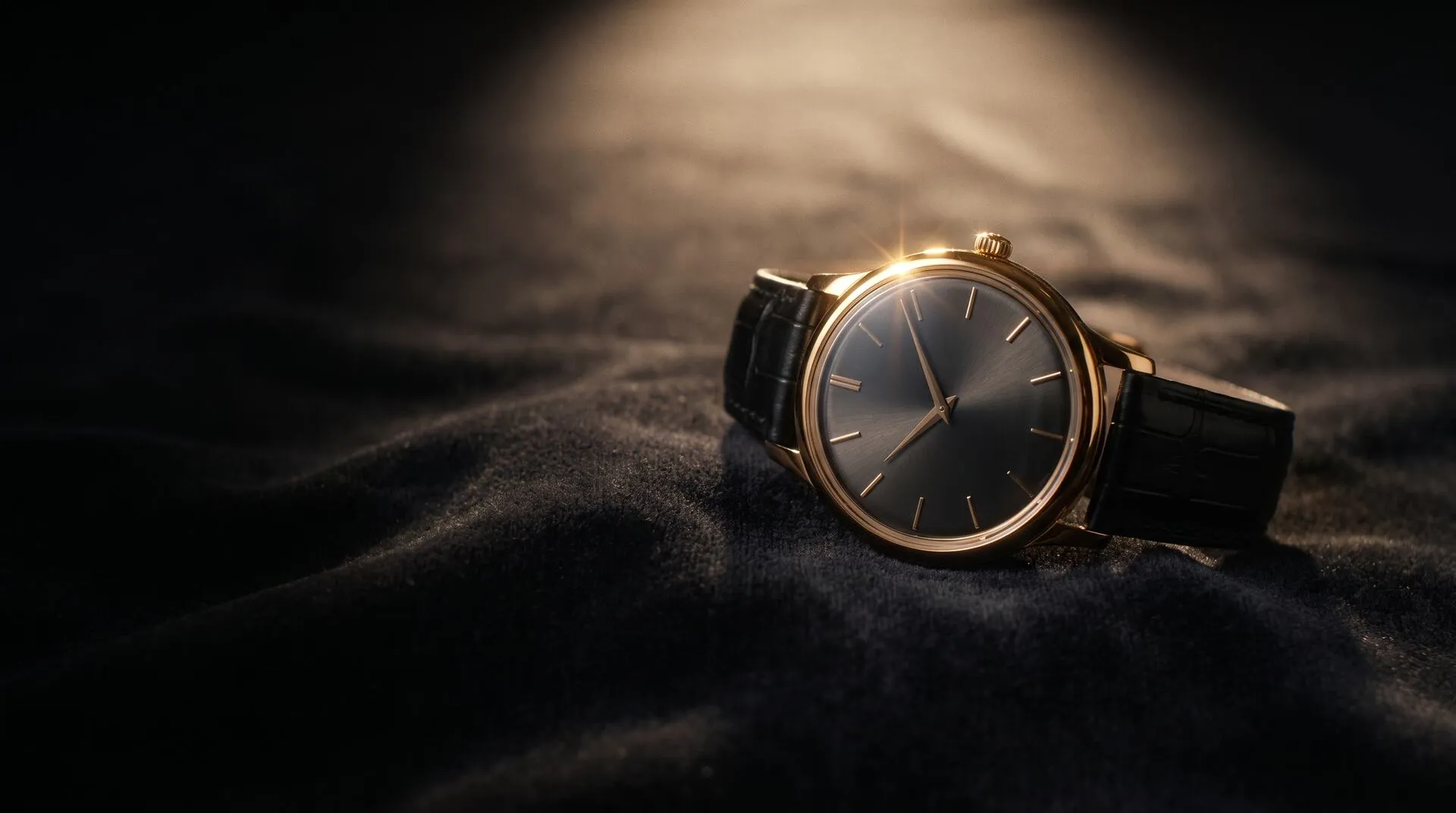
The short answer
Collectors define a vintage watch as one made at least 30 years ago. At auction, its value rests on originality: the dial, hands, bezel and movement should be the ones it left the factory with, or correct period replacements that are disclosed.
Most collected vintage watches date from the 1950s to the 1980s, before quartz movements took over the mass market. Cases were smaller, dials were printed by hand-fed machines and luminous paint aged to warm tones.
Two watches with the same reference can differ in value many times over. The difference is condition and originality, which is why the lot description matters more than the model name.
Vintage references collectors chase
A starting list, not a complete one. Production years are approximate, and each reference ran through several dial and case variants.
| Watch | Reference | Era | What to check |
|---|---|---|---|
How to judge originality
Six checks for any vintage lot. Unfamiliar terms are defined in the watch glossary.
- IDial. Look for crisp, even printing. A repainted dial (redial) or undisclosed service dial lowers value sharply.
- IIHands and lume. Hands should match the dial in style and colour of luminous paint. Mismatched lume points to replaced hands or a replaced dial.
- IIICase. Sharp edges and bevels suggest light polishing. Soft, rounded lugs mean the case has been heavily polished.
- IVMovement. Ask for movement photos. The calibre should be correct for the reference, without corrosion or mismatched parts.
- VBezel and crown. Inserts fade naturally. A bright, perfect insert on an old watch may be a replacement.
- VIProvenance. Papers, service records and a known history add value, but the physical inspection matters most.
Vintage or modern pre-owned?
| Vintage | Modern pre-owned | |
|---|---|---|
Vintage watches at auction: questions
How old does a watch have to be to count as vintage?+
There is no fixed rule. Most collectors and auction houses call a watch vintage at around 30 years old. Collectors call watches from roughly 1990 to 2010 neo-vintage.
Is a vintage watch a good investment?+
Some vintage references have risen sharply in value, but prices move with collector demand and condition. Buy a vintage watch because you want to own and wear it, not as a guaranteed return.
Should a vintage watch be serviced after I buy it?+
Yes, unless the lot has a recent documented service. A specialist service keeps old movements running. Ask the watchmaker to keep original parts and return any that must be replaced.
Is a replaced dial a problem?+
It lowers value for collectors. A service dial fitted by the maker is disclosed and acceptable to many buyers. A redial, where the original dial has been repainted, lowers value much further.
Is a vintage watch water resistant?+
Do not assume so. Gaskets age and crowns wear, whatever the dial says. Treat a vintage watch as not water resistant until a watchmaker has pressure-tested it.
What does patina mean on a vintage watch?+
Patina is the natural ageing of a dial, hands or luminous paint, such as white lume warming to cream or brown. Even, natural patina can add value. Damage from moisture does not.
Related
Crown Auctions is an independent auction house and is not affiliated with the brands named on this page. Trademarks belong to their respective owners.